COVID19: How it affected people? What are the ground realities? Shared via TV News App: Get it from http://tvnewsapp.com/?s Mix you own news from 1000s of world channels
CONFINEMENT,WEEK #6:SPOTLIGHT ON FOREIGN DOCTORS PET ADOPTIONS AND MORE
Confinement, week #6: Spotlight on foreign doctors, pet adoptions and more Shared via TV News App: Get it from http://tvnewsapp.com/?s Mix you own news from 1000s of world channels
Top COVID-19 Developments from Delhi,
Top COVID-19 Developments From Delhi | April 24, 2020 Shared via TV News App: Get it from http://tvnewsapp.com/?s Mix you own news from 1000s of world channels
Pregnant woman from Upupi Recovers from COVID-19
Pregnant Woman From Udupi Recovers From COVID-19, Is Discharged Shared via TV News App: Get it from http://tvnewsapp.com/?s Mix you own news from 1000s of world channels
Watch “New York Antibody Study Finds 13.9% of Residents Have Had COVID-19: Cuomo” on YouTube
Watch “Live: Trump and Coronavirus Task Force Hold White House Briefing” on YouTube

- (no title)I have sent you AZC! AZC is a new cryptocurrency of the AZ Coiner system, with over 20 million members worldwide. To receive your AZC, please visit the link below and use my username (mego77) as your referral code. https://azcoiner.com/invite?user=mego77
- Mego77.com
- (no title)Quali sono le tue più grandi sfide?
- (no title)Com’è la tua creatività?
- (no title)Hey! QuickSell is a fast, simple and secure app that I use to share my catalogue and product list with my customers. Get it from https://quicksell.co/refer/LELWD and use my referral code LELWD to start your free subscription.
MDH: 2,942 total COVID-19 cases, 200 deaths total
https://kstp.com/coronavirus/mdh-2942-total-covid-19-cases-200-deaths-total/5708527/?cat=1 ( Sent from KSTP )
MDH: 2,942 TOTAL COVID-19 cases,200 deaths total.
Busting Myths About Alcohol and Coronavirus The World Health Organization issues a warning about booze

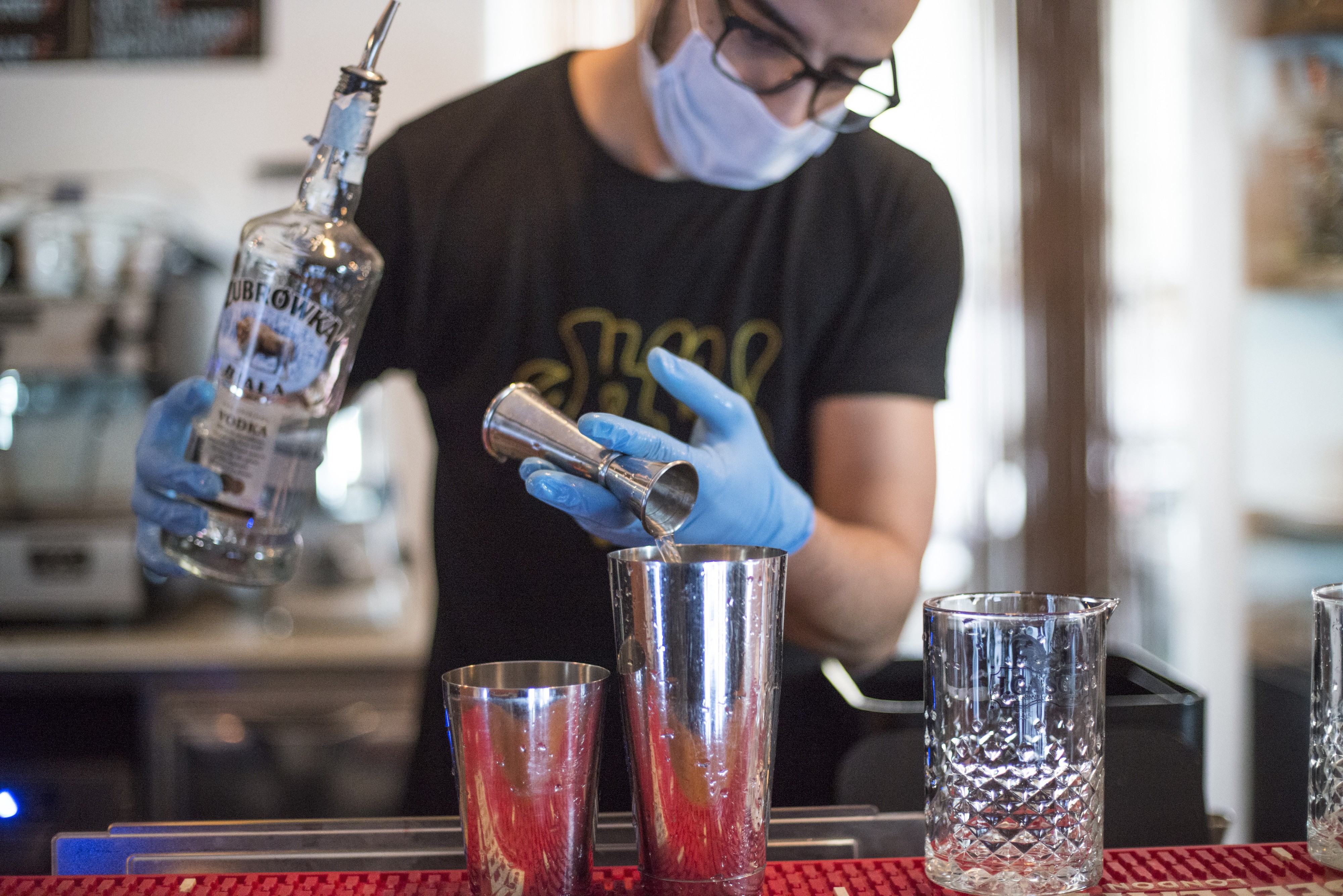
The pandemic may have shut down bars and restaurants, but it hasn’t slowed the nation’s appetite for alcohol. Sales of beer, wine, and liquor are surging, reports Vox; so much so that clinical psychologists at the University of Southern California have expressed concerns about alcohol overconsumption, abuse, and negative effects on immunity, which could make people more vulnerable to Covid-19.
The World Health Organization also cautioned against alcohol use in an update to its website posted Tuesday. It too highlighted well-known public health concerns about alcohol consumption, like the increased risk of injury and violence, especially domestic violence, and the potential for alcohol poisoning. It also pointed out some health risks that are more specific to drinking during the Covid-19 pandemic, warning that consuming alcohol “can exacerbate health vulnerability, risk-taking behaviours, mental health issues and violence.” Drinking alcohol compromises the immune system, making the body more susceptible to infection.
A major part of the update was dedicated to misinformation surrounding alcohol consumption and protection from Covid-19:
“Fear and misinformation have generated a dangerous myth that consuming high-strength alcohol can kill the COVID-19 virus. It does not. Consuming any alcohol poses health risks, but consuming high-strength ethyl alcohol (ethanol), particularly if it has been adulterated with methanol, can result in severe health consequences, including death.”
Methanol, sometimes called methyl alcohol, is a type of alcohol with a different chemical structure than ethanol, the kind that we drink. This difference makes it toxic: As it’s broken down in the body, it’s transformed into formaldehyde, which in turn becomes formic acid, a compound that can cause blindness and death. Methanol is often added to industrial ethanol products, such as solvents, to prevent people from drinking them, but it’s also sometimes added to bootleg liquor.
People who believe that drinking the boozy kind of alcohol can kill the coronavirus might be confused about the virus-killing properties of yet another type of alcohol known as isopropyl alcohol (or rubbing alcohol), the kind you buy in the first aid aisle in a drugstore and apply to the skin. This type of alcohol can kill the virus on surfaces, but only at high enough concentrations — the CDC recommends 60% alcohol or more for hands, and 70% or more for other surfaces. Any less and it’s not effective, as the New York Times cautioned people against trying to make their own hand sanitizer. And you should definitely not drink it.
Pandemic or not, the risks of alcohol use remain the same as always, regardless of the type of alcohol and how you use it. Drinking ethanol still comes with health risks, consuming methanol is still toxic, and isopropyl alcohol is still only useful on surfaces at high enough concentrations. For more information, y
social Distancing Is a Special Kind of Hell for Gen Z
Social Distancing Is a Special Kind of Hell for Gen Z
Teens and young adults are cooped up at home to avoid a disease they aren’t convinced will affect them. Here’s how to help them understand and cope.
Tara HaelleFollowApr 21 · 6 min read

Ifyou wanted to design a highly effective medieval torture device for teens and young adults, it would look a lot like our new normal. It’s the ultimate in being grounded, because everyone else is grounded too.
It’s difficult for most people to remain at home indefinitely. But being forced to stay home, away from friends and favorite hangouts, is undoubtedly a special kind of hell for most teens and young adults, especially those who have returned home from college and are doing distance learning while having to unexpectedly live with their parents again.
It’s also hard for many in this age group to take the pandemic seriously. Though it’s certainly not true of everyone under age 30, perceived invincibility remains a common characteristic of adolescence and young adulthood. And according to a Swytchback survey of 20,000 teens and young adults (ages 16–30) on March 20, nearly half didn’t see the Covid-19 pandemic as “very serious.” Though the proportion of young adults who consider it very serious increased from 51% to 63% during a second survey April 6, more than a third still don’t grasp the gravity of the situation.
The emphasis on older age as a risk factor for hospitalization or death may also have misled younger people into thinking they’re safer from the disease than they actually are. In the initial March 20 survey, 59% of respondents didn’t know that four in 10 people with Covid-19 ages 20–54 need to be hospitalized. And the percentage who knew that fact barely dropped, to 52%, in the follow-up survey April 6.
Perceived invincibility remains a common characteristic of adolescence and young adulthood.
Helping them understand
If you have young adults in your home, a few things might help drive home the gravity of the current situation while also helping them cope with it. Research suggests that people fare better in quarantine situations when they know what’s going on in the world around them, explained Jessica Gold, MD, MS, an assistant professor of psychiatry at Washington University in St. Louis, Missouri.
“It’s important for parents to explain what’s going on and have a conversation about it with their kids,” Gold says. “Risk is a very important point to convey, not just to themselves, but to others.” Online videos, such as this one using matches, this one using Ping-Pong balls and mousetraps, and this animation on Twitter from dietitian Lucy Fry, explain social distancing well and break it down in fun ways that may feel more relatable. “Hearing stories of younger people getting sick, and the possibility that they could get seriously ill, might help as well,” Gold says.
Discussing news articles about the pandemic, such as ones describing the damage the disease can cause and how undercounted deaths likely are, can drive home how bad the situation is in places like New York City, thereby emphasizing the importance of social distancing to reduce the disease’s spread elsewhere. Research has shown that articles with personal stories, such as the choir rehearsal in Washington that tragically spread Covid-19 or the stories of younger Americans dying, tend to resonate with people more than stories containing just facts and statistics, Gold says.
At the same time, don’t overdo it: A recent paper from China, though not yet peer-reviewed, found that more than three hours a day of exposure to Covid-19 news increases the risk of anxiety symptoms — though for many, it likely doesn’t require even that much to raise anxiety levels.
Another way to drive home the importance of staying home and away from others is the Social Distance Game, an online tool that lets users choose how much contact will be reduced and how soon, and then runs a simulation to show how many lives that reduction will save.
It’s also helpful to remind young adults how easy it is to catch the disease and pass it on before they realize they have it. Check out this article from BuzzFeed reporter Alex Campbell, who thought he was taking all the necessary precautions to keep himself and others safe — until he realized he may have exposed others when he went out for fun anyway.
Finally, after any younger children have gone to bed, consider a family movie night that brings the pandemic to your living room. You could start with the Netflix documentary miniseries Pandemic, which, as it happens, began airing just before the current pandemic began.
If you prefer fiction, the most scientifically accurate — and eerily similar to the Covid-19 pandemic — is the 2011 film Contagion. In fact, Kate Winslet’s character was modeled after real-life CDC official Anne Schuchat, the one who spoke at one of the earliest press conferences on the coronavirus and who is heading up the response at the CDC right now. NPR has a great fact-checking article that explains what the movie gets right and wrong.
Other pandemic films, such as Outbreak (about a disease more similar to Ebola) and Children of Men, are either unrealistic or futuristic, but they can certainly help shift your frame of mind when you’re watching something that even somewhat resembles our current situation.
But if teens still try to insist on going out, parents have to be firm. “This is a really hard conversation, but at a certain point, we might all have no choice but to do things like setting hard and fast rules about not leaving the home and taking the keys,” Gold says. “Ideally, this isn’t the place to start, though, since often kids don’t take it seriously because it does not feel immediate to them or a risk to them, or they might not understand it.”
Of course, in some families, the problem isn’t so much conveying the seriousness of the situation; it’s more about simply dealing with all the stress and uncertainty.
Managing the tensions of moving back home
For those in college who had to return to their parents’ home, the adjustment can be frustrating, Gold says. “A particular tension of college-aged kids coming home unexpectedly for the semester is that part of the collegiate experience is identity formation outside the home. Going back home for an extended period of time, under the same rules, always around parental influence, can feel like a regression.”
Parents need to recognize that their child is not in high school anymore, Gold says. She recommends thinking carefully about interacting with young adult kids given how unfamiliar house rules may feel to them. “This might include giving them more independence and time to themselves as well,” she says. “Communication is key, including even expressing why this can feel hard for you as a parent or college-aged person and why something different needs to be put in place.”
A particular tension of college-aged kids coming home unexpectedly for the semester is that part of the collegiate experience is identity formation outside the home. Going back can feel like a regression.
College students may also be coming home to a place that does not feel safe or secure to them. ”Sometimes it is the origin of trauma, or a source of anxiety or depression, and going home might worsen some of these things,” Gold says. Young adults should recognize that possibility and “try to find ways to healthily cope with the unplanned added stressors,” including seeking professional help if needed. Most counselors aren’t seeing people in person, but telehealth counseling services are available.
How parents can regain their sanity
“First, it is okay to admit to yourself that this is hard and that you may get a lot less accomplished right now, but that does not make you less of a successful parent, employee or human,” Gold says. “Be kind to yourself. This is a really hard time, and balancing everything is unprecedented.”
If you haven’t already set up a schedule, try setting one up now — or revamp it if a previous one isn’t working for everyone — for adults, small kids, teens, and young adults.
“You can have times when you interact with each other but also have times set aside to get work done yourself,” allowing parents and kids to “have daily structure and get work done,” Gold says. “It won’t be perfect, but it will help.”
Finally, look after yourself. “Always take time for self-care,” Gold says. “This might have to happen when your kids are sleeping or when you can actually be alone, but take time for yourself and something you enjoy, even if it is simple, like taking a b
However, You’re Feeling Right Now Is Totally Normal,
Top highlight
However You’re Feeling Right Now Is Totally Normal
A helpful glossary of pandemic emotions

Abigail LibersFollowApr 22 · 6 min read

Right now, every day, hour, and minute feels different. Some mornings, I wake up hopeful; other days, I’m filled with despair. One minute I’m feeling healthy and adjusted; the next, I’m scared to go outside to walk the dog.
In the face of a crisis, experiencing a strange mix of emotions is normal, says Ryan Howes, PhD, a clinical psychologist in Pasadena, California. “Some people are running on fear and adrenaline, others are feeling exhausted and burned out,” he explains. “People are wondering: Why can’t I sleep? Why did I just spend six hours on Twitter? Everything they’re feeling is a normal reaction to stress.”
Problem is, it can be difficult to put a name on this swarm of (mostly) negative feelings. “Our culture is not emotionally literate,” says clinical psychologist Ellen Hendriksen, PhD, author of How to Be Yourself: Quiet Your Inner Critic and Rise Above Social Anxiety. “When it comes to describing how they feel, most people only know a few basic terms, like sad, mad, glad. But these are just catchalls for a huge range of emotions.”
The thing is, learning how to identify specific feelings — like grief or anxiety — is crucial because doing so can help you work through those emotions. “If you know, for example, that what you’re feeling ticks the box for depression, then you can say ‘Oh, there’s a name for this and there are things I can do to deal with it,’” says Howes.
On the flip side, failing to identify your emotions may only make them worse. “When you don’t have a name for what you’re feeling, you get anxious, which compounds the problem. So not only are you feeling bad but you’re also scared about why you feel that way,” explains Howes.
Below are some of the emotions you might be feeling in the midst of Covid-19, plus how to deal with them. It’s worth noting that this list is only the tip of the iceberg — there are tons of things you may be feeling right now, and they’re all valid. But the emotions below are a good starting point, and recognizing them will help you have compassion for yourself — and others, especially those who might be in a different mental space right now.
“People are waking up to this heaviness and sadness. They’re telling me, ‘I cried and I don’t know why.’ It’s grief.”
Grief
Sadly, more and more people are dealing with the death of a loved one due to Covid-19. And while that kind of loss certainly brings up grief, there are other losses that may make you feel like you’re in mourning. “Trauma always involves a loss and with this pandemic, we’re dealing with the loss of the world as we knew it,” says grief expert David Kessler, author of On Grief and Grieving: Finding the Meaning of Grief Through the Five Stages of Loss.
Maybe you’re grieving about the loss of your routine, your job, your freedom — all of that can trigger a deep sense of sadness that you may not recognize. “Grief is such an unknown emotion for people,” notes Kessler. “People are waking up to this heaviness and sadness. They’re telling me, ‘I cried and I don’t know why.’ It’s grief.”
Like it or not, the best way to deal with grief is to allow yourself to feel it — and not judge yourself for it. “We’re the first generation to have assessments for all our feelings, like: I’m sad but I shouldn’t be. We judge all our feelings and we end up with all these half-emotions that we never fully process. If you can just stay in your feeling, it will pass through fairly quickly,” says Kessler. “People worry that if they allow themselves to feel grief, it’ll never go away — like I’ll never be able to stop crying — but that’s not true. When you feel an emotion, it moves through you, and then you feel the next emotion and the next.”
Anger
You know what anger feels like but what you may not realize is that often it’s a “secondary emotion,” meaning it’s in reaction to a primary emotion like hurt, loss, embarrassment, or injustice, says Hendriksen. For example, if you’re mad at your mother for not following social distancing rules, what’s underneath that could be fear — you’re scared that she’ll endanger herself or others.
“Whenever people are feeling angry, I ask them to dig for the softer emotion underneath it,” says Hendriksen. Are you disappointed? Ashamed? Jealous? Scared? If you’re having trouble identifying the root emotion, look to your thoughts and body sensations for clues. For example, if your mind is racing and your jaw hurts from clenching, you might conclude you’re actually anxious. Or, if you’re ruminating about the past and your body feels heavy, you might be feeling depressed.
Of course, it’s possible that the primary emotion truly is anger — maybe you’re a frontline worker and you’re frustrated that you don’t have the supplies you need. Maybe you’re hunkered down at home and you’re outraged at others who aren’t taking the pandemic as seriously.
Let the anger move through you and then channel it into something constructive, suggests Howes. Organize with others who share your frustrations, write a letter to your congressperson, donate money to a cause that matters to you. Taking productive action will help mitigate the anger you’re feeling.
Fear
“A lot of people are experiencing fear right now and it’s hard to sit with,” says Howes. “It makes you feel small and powerless, whereas anger makes you feel strong and energized.” Your fear may run the gamut from being scared of getting really sick from the virus to being afraid of what the future will look like.
That fear goes hand in hand with anxiety, says Hendriksen. “Anxiety is fear of the unknown, and right now there’s a lot we’re uncertain about.” Some people don’t know where their next meal will come from; others don’t know if they’ll have a job on the other side of this. Whatever your anxiety is about, it’s okay to feel scared.
One way to mitigate all the unknowns is to create some certainty for yourself, says Hendriksen. If you’re home right now, you can do that by sticking to a regular routine, whether that means exercising at the same time each day or making it a practice to call a friend after dinner. “Creating anchors in your day is soothing,” says Hendriksen.
Guilt
If you’re not part of a vulnerable population or fighting on the front lines right now, chances are you feel some degree of guilt. “People feel bad that they’re not doing enough or they’re not suffering enough,” says Howes. Some may even feel “survivor’s guilt” if they haven’t been directly affected by the coronavirus.
While it’s normal (and healthy) to feel for those who are suffering around you, guilt may not be the most helpful reaction. “Guilt is the emotion you feel when you think you’ve done something wrong,” says Hendriksen. Unless you’re a doctor or essential worker, you’re not at fault for staying home — in fact, you’re doing exactly what you should be doing.
Rather than beat yourself up for being more fortunate than others, consider what you can do to help people who need it. Maybe that means giving money to local businesses or organizations or offering emotional support to friends and family. Whatever you do, being of service won’t just help others — it’ll make you feel better, too

 life is beauty
You must be logged in to post a comment.